
How to Vermin Proof Your Shed
Pests love sheds. With less traffic compared to houses, vermin have the opportunity to make a home for themselves in the nooks and crevices in sheds, particularly with long term storage of items. Unfortunately vermin can cause damage to your shed and its contents. Whether it’s through chewing, staining or burrowing through the structure, an infestation can cause major problems. However, there are ways to prevent vermin from getting into your storage shed in the first place.
WHAT ATTRACTS VERMIN?
Sheds are very attractive homes for bugs and vermin, due to the dark, often humid conditions. Creepy crawlies of all kinds may make themselves welcome in your shed, which then attracts vermin and other larger pests chasing the food supply.
Older sheds in particular can be hot spots for vermin, due to wear and tear over time allowing access through cracks and holes, as well as a potential collection of junk or rubbish. If your shed is particularly run down and old, it may be time for an upgrade. It’ll likely be more affordable and sustainable in the long run to install a new vermin proof shed than attempt to patch up and seal the old one.
It’s likely your shed is often left void of human interaction for periods of time which can encourage pests to move in. Vermin seek out shelter – particularly in the cool or hot weather – and a shed free of regular activity is an ideal spot.
There are plenty of nooks, crannies and sneaky hiding spots in your shed, inviting places for rodents to seek shelter and set up camp. In addition, it’s likely there’s plenty of items and materials in your shed that mice, rats and other vermin can use as bedding or to nest.
Vermin are attracted to a plentiful food supply – for example, a chicken coop with regular deposits of chicken food. Vermin may set up camp nearby to be close to a bountiful supply of food. If you store pet food such as dog food, horse feed or bird seed in your shed, unless properly stored and sealed, rodents can see this as an invitation. A bag of bird seed is very easy for a mouse or rat to chew through.
WHAT REPELS VERMIN?
While vermin can certainly thrive in all sorts of conditions, they’re less likely to be found in areas of high activity. They prefer areas that are secluded and free of regular traffic. Visiting your shed regularly may deter some pests.
Rodents also avoid areas inhabited by a predator, such as a resident cat or dog. This can encourage the pests to take up residence in your shed, which is accessible to them through tiny holes and cracks, but not accessible to your pet cat.
Rodents can find their way in through the smallest of holes or crevices, but you can also help to prevent an infestation by ensuring you secure your shed each time you have accessed it, by fully closing the sliding door or roller doors.
WHAT DAMAGE CAN VERMIN CAUSE?
The nuisance of rodents goes way beyond their smell and the annoyance of their droppings – though even this can be damaging to the contents of your shed, causing irreversible staining and damage. An infestation left unchecked can lead to structural damage of your shed, due to their chewing and burrowing through structures. Mice and rats will use virtually anything to build their nests, which will lead to them chewing and pulling apart wood, cloth, paper and other materials commonly found in the shed.
A vermin proof shed will also protect the electrical appliances, tools and other electrical wiring in your shed, as rodents can easily chew through the plastic coatings on wires.
Items in your shed, such as furniture being stored away, can be damaged or stained by pests. Vermin can reproduce very, very quickly, so what starts out as a small problem can quickly become a huge infestation.
USING THE RIGHT MATERIALS & DESIGN
Constructing your new shed from the right materials is a good first step to prevent vermin from making their way inside. Use roof and wall sheeting that fits together well and doesn’t crack or warp which would otherwise give vermin an opportunity to squeeze through; this is the first line of defence against pests.
At Spinifex Sheds, we eliminate this issue through using high-quality materials such as colorbond sheets and providing a design for all sheds so that we ensure all materials are provided at the correct size and fit together snugly.
Wooden sheds are much more susceptible to rat and mice infestations, as they are easy to chew through and are not leak-proof. Sheds constructed from colorbond steel sheets and similar materials are the best option, as they’re much more equipped to stand the test of time against rodents.
Vermin flashing is a useful tool to keep out rodents, installed between the shed wall sheeting to stop pests from getting into the structure.
A good design will account for these issues in advance and is a much better technique for preventing vermin access than patching up issues post-construction.
VERMIN SEALING SHEDS
Another very important product is Vermin Seal, which fits snugly into the contours of the shed sheeting shape to block off any potential gaps that could be accessed. This can be fitted to new or existing sheds easily and is extremely effective at preventing access by vermin.
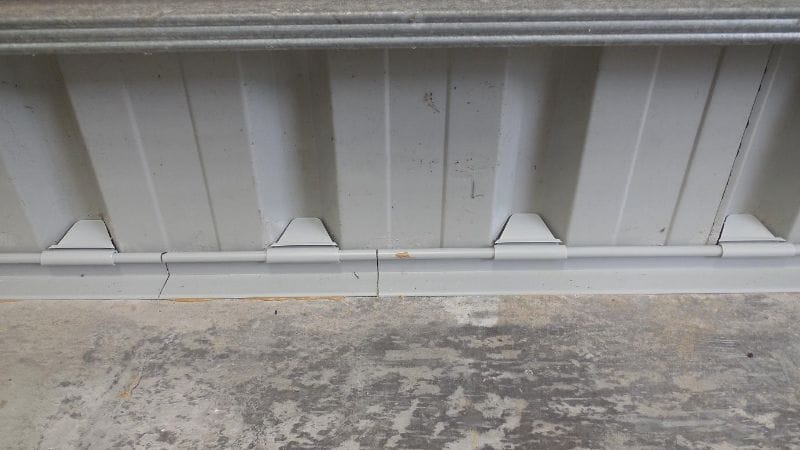
Example 1: Vermin Seal
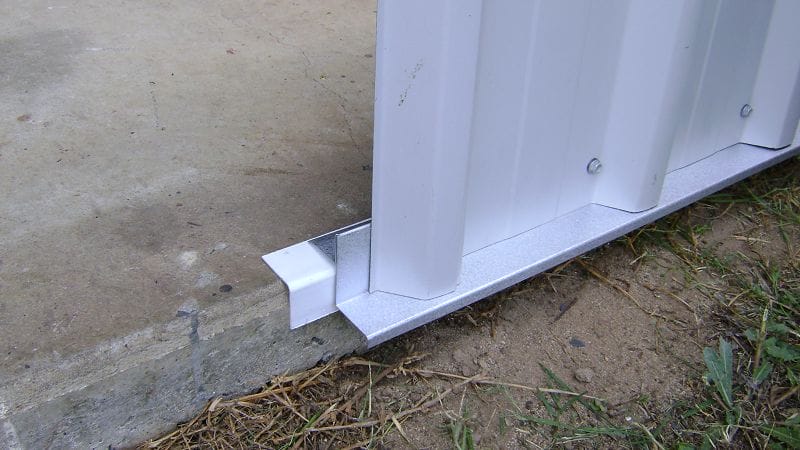
Example 2: Vermin Seal
A Concrete Slab Provides the Best Vermin Protection
Concrete is a great method to reduce the risk of vermin making their way into your shed. A concrete slab provides a strong and sturdy structure which prevents gaps or cracks from occurring. With a good seal, you can greatly reduce pests from making their way inside.
A good quality seal is the perfect method to vermin proof your shed along with a concrete slab, and not only does it keep pests out, it helps to weather proof your shed as well. There are several different types of vermin seals to choose from to suit your needs. You will find some seals that are perfect for bush fire prone areas, and suitable for farm sheds. Some of the benefits of sealing your shed include:
- Weather proof
- Vermin proof
- Prevents corrosion
- Fits all sheds
- Fire retardant
REPAIR LEAKS AND CRACKS IMMEDIATELY
For existing sheds, it’s important to repair any leaks or cracks that appear as soon as possible. A leak in the roof may encourage vermin by providing them with an ongoing water source. Pests can also find their way in from underneath the shed. They can burrow through cracks in the floor easily. So it’s a good idea to regularly check for any cracks in the concrete floor and repair them immediately.
At Spinifex Sheds we take pride in providing leak-proof sheds and so this is not an issue for one of our sheds. The key components to a leak free shed are; using neoprene washers to avoid leaks for both roof and wall screws, correct installation of flashings and ensuring that all wall sheets correctly overhang the edge of the slab to direct water flow.
KEEP THE SURROUNDING AREA CLEAN
Often the perimeter of sheds become a dumping ground of sorts for leftover building materials and other household items. Unfortunately this provides an attractive environment for vermin and can encourage them to set up residence. Be sure to keep the surrounding area of your shed free from clutter and anything that might encourage vermin into the area.
CLEANING YOUR SHED
Sometimes it’s easy to forget about cleaning a shed, particularly if it’s only used for storage. However, a regular and thorough clean not only allows you to spot any small infestations and to prevent the problem from growing; the simple act of cleaning shows vermin that the area is busy which tends to deter them from sticking around.
You should ensure that as well as securing your shed by fully closing the sliding or roller doors, everything in the shed is sealed. This will mean that should vermin make their way into your shed, they can’t get into the items you have stored in there.
Rodents such as rats and mice can cause irreversible damage not only to the contents of your shed, but to the structure of the shed itself. Get in touch with the highly experienced team here at Spinifex Sheds and get us on board to vermin proof your shed. If you’re in the market for a new custom shed, we can design you a vermin proof shed so that you have peace of mind from the get-go that rodents won’t be an issue.
Vermin proofing your shed against a range of pests is not only important to protect your shed and its contents, it can also be important for your safety especially in rural areas. For more information about rural and farm sheds call our friendly team on (08) 9390 4662.

SIMON BUSBY
Owner - Spinifex Sheds
I've got a passion for helping people build the right shed. Whether that's custom made for your hoist, fitting the shed into a tight site or just a shed that's going to last many years, I love to help.
Similar Articles
How to Organise a Storage Shed
A shed’s meant to be useful, not a dumping ground. If yours is a mess—tools buried under junk, no space to move—it’s time to sort it out. And here’s the thing: a proper shed, built right from the start, makes organisation easy. If you’re constantly battling clutter, maybe the problem isn’t your organisation, it’s your shed. Let’s get it sorted. Here’s how to organise a storage shed the right way.
How to Weatherproof a Shed (The Right Way)
With the diverse and often harsh Australian climate, it’s important to ensure that your shed can withstand everything from scorching sun to torrential rains. At Spinifex Sheds, we don’t just slap together sheds—we build them right. With top-quality materials and expert craftsmanship, we make sure your shed is weatherproof, durable, and made to last. Here’s how to do it properly, with the right team on the job.

Is It Worth Repairing a Shed? Here’s What We Think
As Aussie homeowners, the state of our backyard sheds often takes a back seat until significant issues become too big to ignore. But the question that comes up time and time again, is if it’s worth repairing a shed, or are you better off just replacing the entire structure?