
10 Shed Space Saving Ideas
Key takeaways
- Get everything off the floor and onto walls, freestanding racks and shelving to reclaim wasted vertical space.
- Use steel pegboards and steel shelving. Cheap plastic warps and cracks in sustained 40°C heat.
- A mezzanine adds usable area without extending the footprint, but we’d advise a 4.5 metre eave height as a practical minimum, plus engineering and council approval.
- Don’t hang heavy loads off roof purlins. Overhead racks generally need their own posts to the slab, or specific engineering for your build.
- Roller doors avoid the floor space a hinged door loses to its swing, but still need clearance above the opening and room either side for structural connections.
- Think about storage at the design stage. Extra height and a mezzanine-ready frame cost less to build in than to retrofit, though council height limits shape what’s possible.
You started with a clean shed and big plans, and now you can’t find the angle grinder, there’s camping gear blocking the workbench, and half the floor is taken up by stuff without a home. Most people buy the shed, chuck everything in, and wonder six months later where the space went.
A shed running out of room usually has more capacity than it looks. Most shed space saving ideas that work come down to using the walls, the height and the layout properly rather than paying for a bigger footprint. For garage-specific tips, see our best garage storage ideas.
Why most sheds run out of space
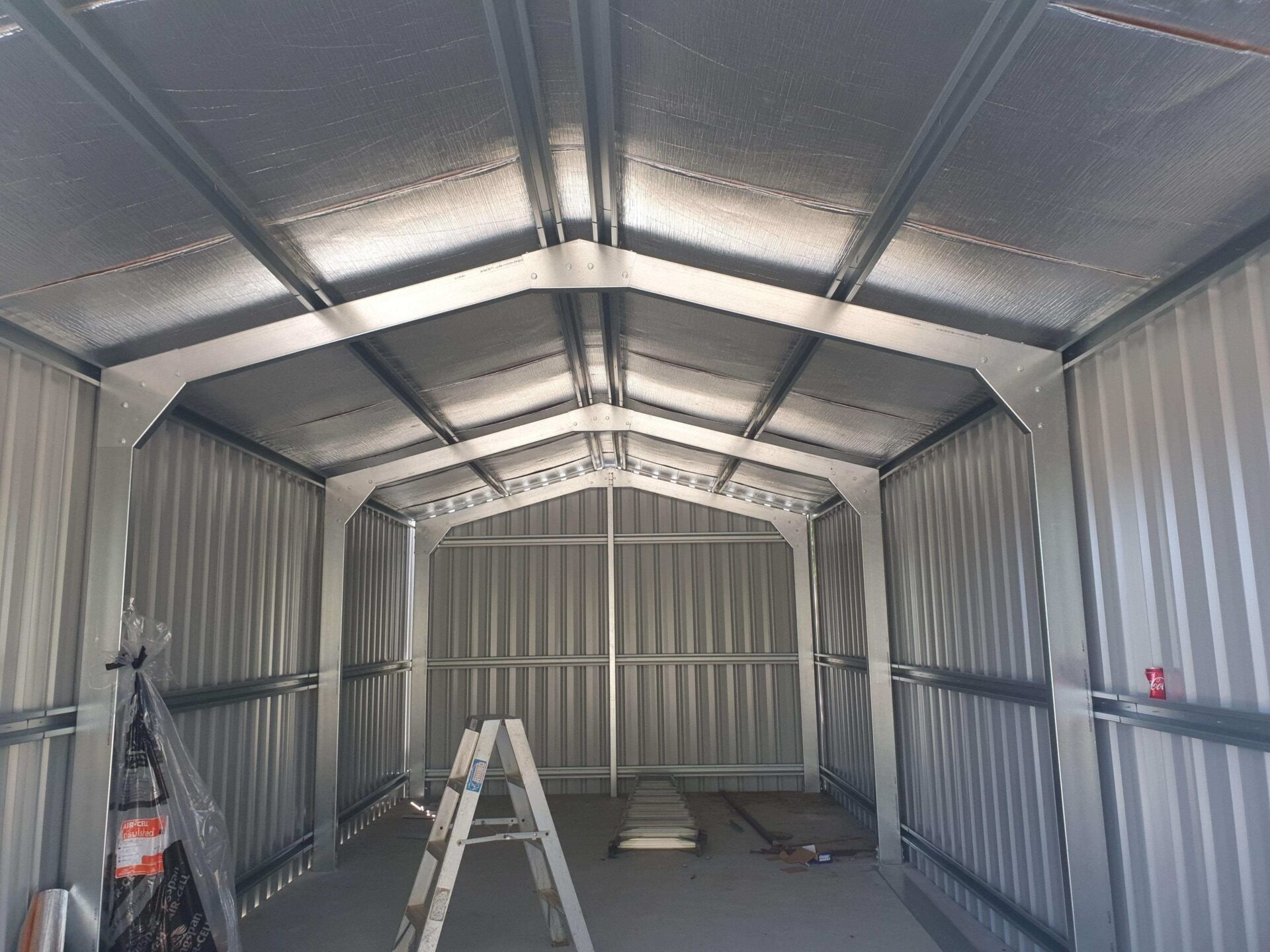
Nine times out of ten this isn’t a size problem so much as a planning one. Think about how your shed looked the day it went up, with a clean slab and bare walls, then fast forward six months to the mower jammed in the corner and paint tins you can’t reach.
It happens because everything ends up on the floor. Most people never use their walls or the space above head height, so nothing has a proper home and before long you’re buying duplicates of things you already own. The other common cause is a shed that was too small from the start, which is why it’s worth adding around 20% to whatever you think you need. Most shed space saving ideas are really just ways of reversing that.
1. Wall-mounted storage
Have a look at how much bare wall you’ve got right now, because all of that is storage you’re not using and it costs no floor space to fill. Of all the shed space saving ideas here, using your walls gives the best return for the least money. Wall-mounted track systems with adjustable hooks and baskets suit gear you reach for regularly, since you can rearrange them as what you own changes.
Fixing matters more than the product. Anything carrying real weight wants to go into structural framing rather than cladding, which is far easier to plan before the shed goes up than to sort out after.
2. Overhead and ceiling storage
Overhead space is the biggest easy win in most sheds, and it’s also where people get into trouble. The roof purlins in a steel-framed shed aren’t designed to carry hanging loads, and Stramit’s technical data makes no allowance for it.
In practice you generally can’t fix a ceiling-supported rack or hoist to one of our sheds without having it engineered for your specific build. Send us the manufacturer’s details and we can pass them to the engineer, because the answer depends on the rack, the load and how your shed is framed. The simpler alternative is a freestanding rack with its own posts to the slab, which carries its load independently of the roof. Either way, check the rated capacity and be honest about what you’ll actually store up there.
3. Workbench with built-in storage
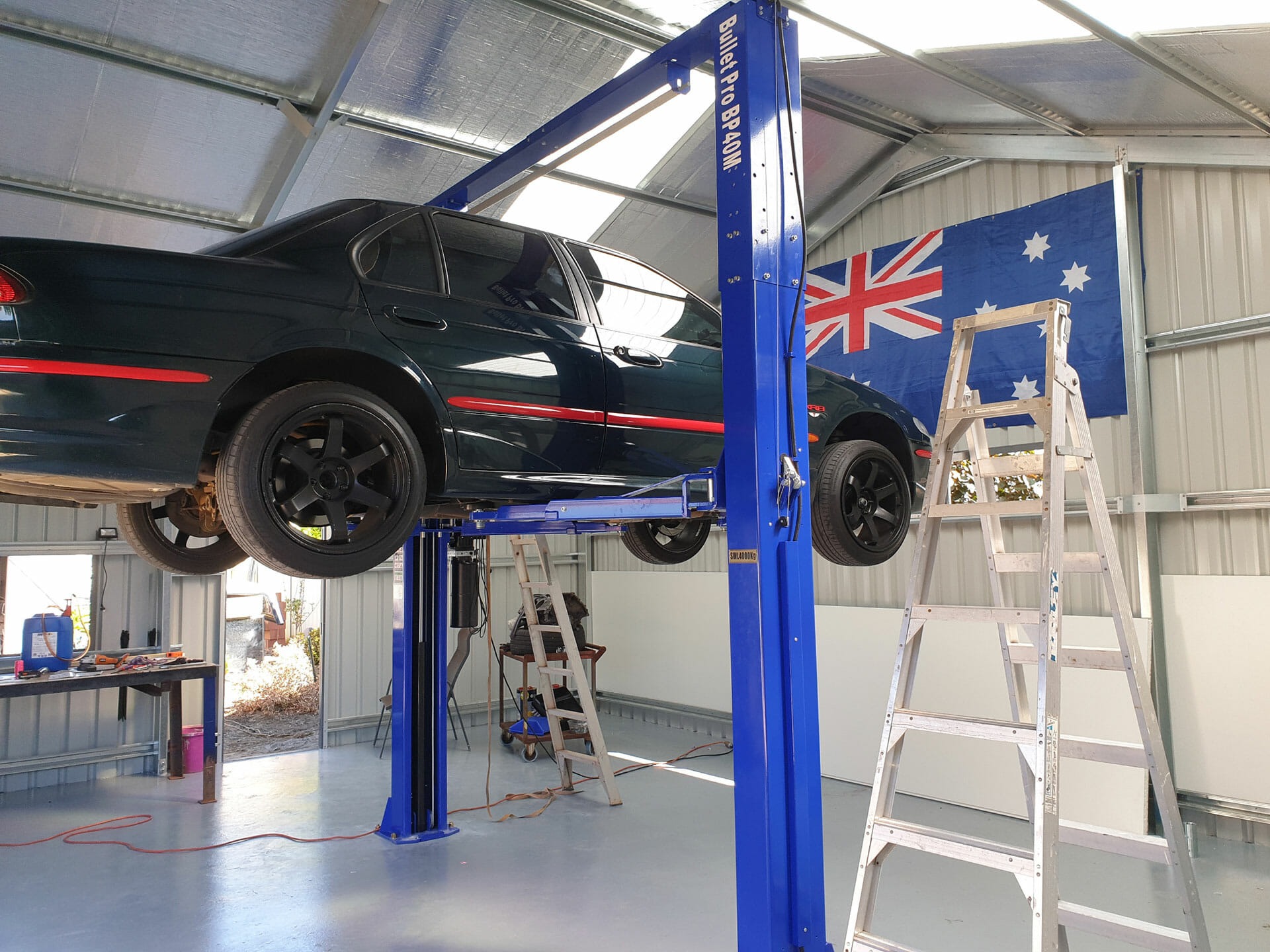
Ask anyone what the heart of their shed is and they’ll point to the workbench. A good one with drawers underneath, a pegboard above and an overhead cabinet keeps everything in a single vertical footprint, so leave clearance for drawer extension and door swing when you’re placing it. Think about power early too, because extension leads across the floor are a trip hazard. We don’t do electrical work or fitout, so that’s a conversation for your sparky, but knowing where the bench will sit makes their job easier.
Pinnacle workbenches from Bunnings are a solid starting point, and GTools and Noxx Industries both make steel drawer workbenches with integrated pegboards.
4. Mezzanine floors
If your shed has the height, a mezzanine adds a second level without adding a square metre to the footprint, and for a lot of people it’s the biggest single gain available. It’s also the most involved thing on this list.
Height is the constraint that catches people out. Ceiling height requirements apply above and below a mezzanine, so a shed that looks tall enough on paper often isn’t once you account for the floor structure between levels. We’d advise a 4.5 metre eave height as a practical minimum.
Engineering isn’t optional. Mezzanines must be designed to AS/NZS 1170.1 load standards, and freestanding posts to the slab are generally preferred because most shed frames aren’t engineered for the extra load. They’re building works under the NCC and will almost always need council approval, which varies between Perth councils. Costs move around depending on size and access, and stairs and handrails are a meaningful line item on top.
Getting the frame engineered for a mezzanine at the build stage costs far less than adding it later, and it’s one of the better things to spec into a custom shed build.
5. Pegboards, hooks, and magnetic strips
Pegboards, hooks and magnetic strips are the fastest and cheapest storage you can add, and the material matters more than you’d think. Hardboard pegboard, the cheap brown stuff from Bunnings, works fine in a spare room, but in a shed it absorbs moisture, swells, and the holes widen until your hooks won’t stay put. Steel pegboard is stronger, the holes stay true, and many come magnetic-faced. Australian brands include Wall Control, Kincrome, Stratco and Pinnacle.
Once it’s up, trace each tool’s outline so a gap tells you what’s missing, and add magnetic strips for the pliers and chisels that never sit well on hooks.
6. Shelving that can handle Perth’s heat
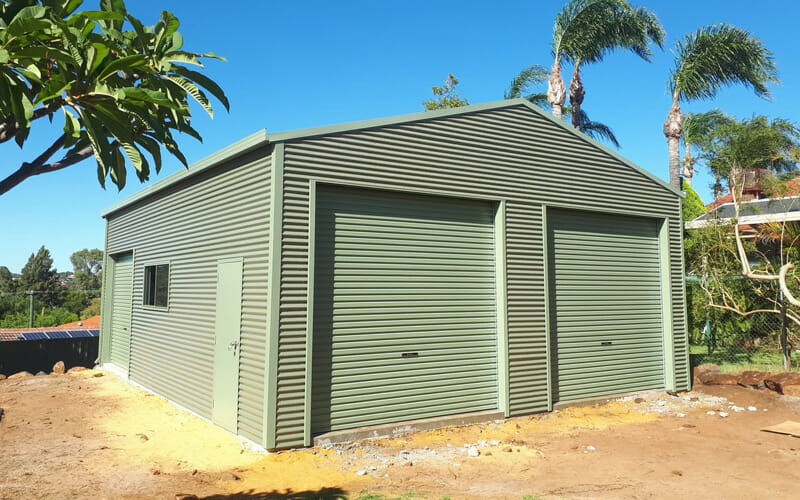
If you’ve come back to your shed after a hot week and found a plastic shelf sagging under a few tins of paint, you know the problem. Most cheap shelving is polypropylene or PVC, the same plastic as budget storage tubs, which is fine in a spare room but struggles in a steel shed through a Perth summer. Perth averages around 26 days above 35°C a year according to the Bureau of Meteorology, and a closed shed gets well past 40°C on those days. That heat softens plastic, and once UV starts breaking it down you get shelving that sags, yellows and snaps.
Steel or treated timber is the safer call. Three Australian brands handle real weight: Rack It from Bunnings with its 1000kg boltless system, Pinnacle four-tier units rated to around 600kg per shelf, and longspan systems from ReadyRack at 600 to 2000kg per shelf.
7. Zoning and labelling
Here’s where most people stop, having bought the shelves and mounted the pegboard, only to find everything’s a mess again six months later because nothing was ever zoned.
Divide the shed into function-based areas: power tools, hand tools, gardening, automotive, sports gear, seasonal items, and a separate spot for chemicals and paint. Put frequently used items near the door, shift seasonal gear high or into deep corners, and use clear bins instead of cardboard, which collapses in humidity and attracts pests. Label everything with something that survives the heat. A 15-minute monthly reset keeps the system working, and as Gina Beschorner noted on Style Curator, the biggest gains came from zoning and keeping frequently grabbed items within arm’s reach rather than buying more storage.
8. How door choice affects your floor space
Most people don’t think about this until the shed’s already built. A hinged PA door needs room to swing, and that arc eats roughly half a square metre of floor right next to where you probably want your bench or shelving.
Roller doors avoid that, coiling up above the opening rather than swinging into the room, which also makes them better for vehicle access, security and keeping Perth dust out. They’re not free of space requirements though: a roller door needs clearance above the opening for the curtain to coil into, plus room either side for structural connections. Sliding doors run flat along the wall where you want the widest possible opening.
For most workshop sheds, a roller door for vehicles and a PA door for foot traffic is the standard combination. Think about where that PA door goes so the swing doesn’t cost you your best wall, and see our sliding doors vs roller doors comparison if you’re weighing it up.
9. Protect what you’re storing from Perth’s climate
Good storage is only half the job. A closed steel shed with no airflow can push past 50°C on a February afternoon, which is when paint goes off, batteries swell and aerosols turn hazardous.
Whirlybirds on the roof and louvre vents low on the walls create passive airflow that pulls the worst of the heat out, and roof and wall insulation makes a real difference if your shed doubles as a workspace. A lighter COLORBOND® roof colour helps too. Store chemicals, paint and aerosols in the coolest part of the shed and off the concrete, ideally in a lockable steel cabinet, and keep batteries and electronics out of direct sun. Safe Work Australia publishes guidance if you’re storing anything in quantity.
10. Build storage in from the start
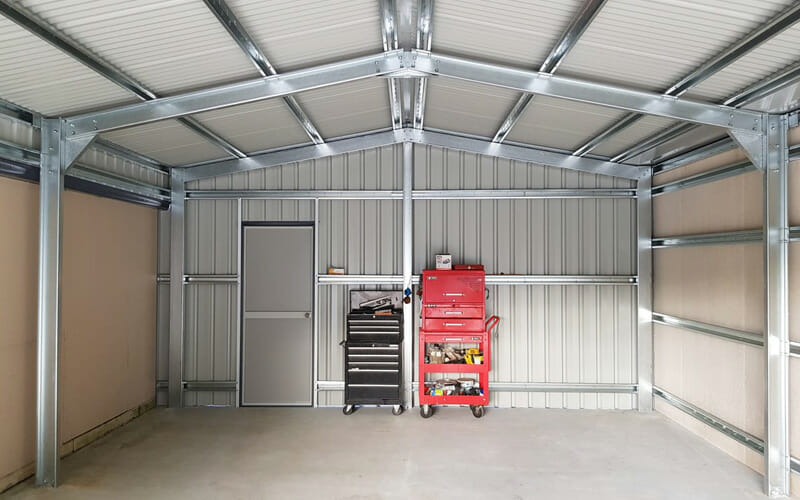
All of these shed space saving ideas work in an existing shed. The cheapest storage, though, is designed in before the first steel goes up.
- Additional height may be worth considering during design, for a mezzanine or tall overhead storage. Cost depends on the build, and council height restrictions sometimes cap what’s possible, so raise it early.
- A mezzanine-ready frame engineered from the outset, which costs far less than adding one later.
- Strategic door placement, so the PA door swing doesn’t cost you your best bench wall.
- Built-in shelving battens, so heavy storage fixes into the structure rather than the cladding.
- A clear picture of your layout, which makes life easier for whoever handles your electrical and fitout.
At Spinifex we handle the shed: design, engineering, council applications, slab, installation and clean-up. Fitout isn’t our trade, so shelving, racking, cabinetry and electrical go through your own people – but we’ve seen how these sheds actually get used, so tell us your plans and we’ll get the bones right. Every shed uses 100% Australian-made BlueScope steel, backed by a warranty of up to 20 years.
Build a shed that works from day one
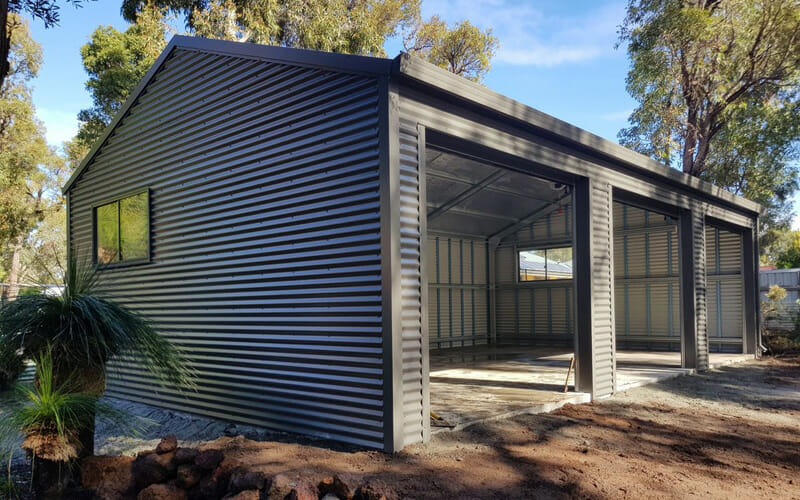
You can retrofit a shed with racks, shelving and pegboards, and for most people that’s the right move. If you’re planning a new build, though, that’s your one shot at the bones: height for a mezzanine, framing that supports real loads, doors in sensible spots.
If you want a shed that works properly from day one, get in touch for a free, no-obligation quote and we’ll walk you through what’s possible for your block.
Frequently asked questions
How do I save space in a shed?
The best shed space saving ideas start with getting everything off the floor and onto wall shelving, pegboards and freestanding racks. Zone by function, label everything and keep heavy items low. If you’ve got the height, a mezzanine adds the most usable area, though we’d advise a 4.5 metre eave as a practical minimum plus engineering and council approval.
How do I declutter my shed?
Pull everything out and sort into keep, bin, donate or sell, on the basis that anything untouched in two years can go. Give every remaining item a home and use clear labelled bins.
What shelving works best in a hot shed?
Steel beats plastic comfortably. Plastic warps and goes brittle in Perth’s heat and UV once internal temperatures push past 40°C, while powder-coated or galvanised steel from Rack It or Pinnacle handles real weight and lasts.
Is a mezzanine floor worth it?
If you have the height, a mezzanine is the highest-impact upgrade here, adding usable floor area without extending the footprint. We’d advise a 4.5 metre eave height as a practical minimum, since ceiling height requirements apply above and below the floor. Factor in engineering, council approval in WA, and stairs and handrails on top.

SIMON BUSBY
Owner - Spinifex Sheds
I've got a passion for helping people build the right shed. Whether that's custom made for your hoist, fitting the shed into a tight site or just a shed that's going to last many years, I love to help.
Similar Articles
8 Shed Lighting Ideas (That Actually Work)
If you’re planning a new shed or just want to make your existing one more usable, lighting makes a big difference. Whether you’re working on the ute, knocking out a quick project, or finding that last tool in the back corner, poor lighting makes everything harder than it needs to be.
She Shed Ideas: That Aren’t Just Pretty Pictures
A backyard shed isn’t just for storing tools and lawn gear. With the right setup, it becomes a space you’ll actually want to spend time in. A place to create, relax, or get things done without distractions.
This guide walks through practical she shed ideas that go beyond Pinterest trends. These are proper steel sheds built to suit your block, your needs, and the tough WA conditions.
How to Vermin Proof Your Shed (Properly)
If you’re looking into how to vermin-proof a shed, it pays to get the facts straight. It’s not about throwing a few traps in the corners or spraying some repellent and hoping for the best. Pests are opportunists. In Western Australia, that can mean dealing with...